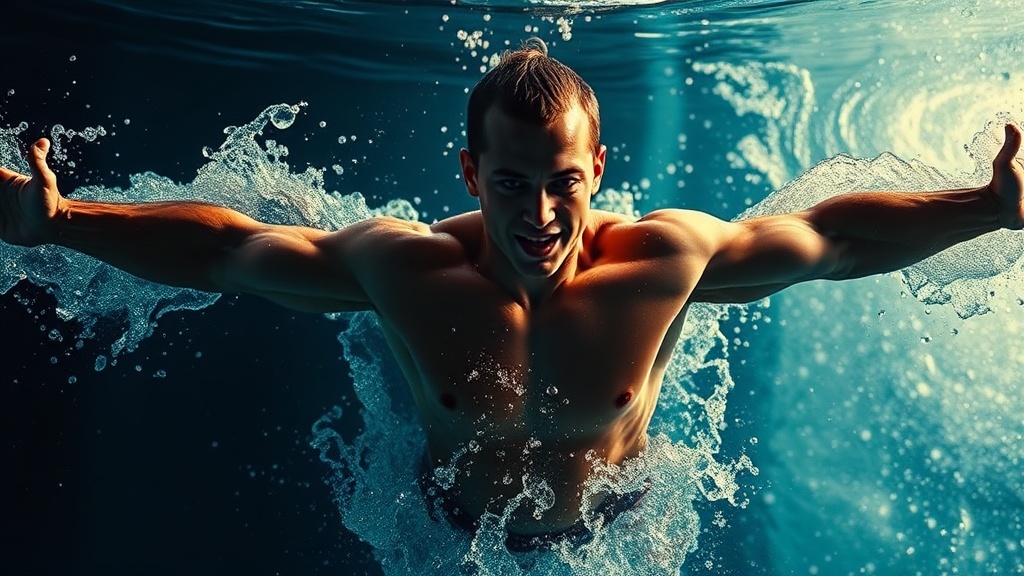
Why Muscle Symmetery Matters for High Impact Water Entry

Understanding the Physical Requirements of Impact Absorption
This post covers how muscular imbalances and asymmetry affect your ability to enter the water safely during a high-altitude cliff dive. You'll learn why unilateral strength training is more important than bilateral lifts for protecting your spine and joints during high-velocity impacts. We'll look at how uneven muscle development leads to rotation errors and increased injury risk when you hit the water.
When you're falling from heights, your body isn't just a single unit; it's a complex system of levers and stabilizers. If one side of your core is weaker than the other, your body will naturally favor that side during the descent. This isn't just about looking a bit crooked in the air—it's about how your body reacts to the violent deceleration of hitting the water. A slight tilt in your posture can lead to an uneven impact, which places massive torque on your lumbar spine and hips. If your left obliques are significantly stronger than your right, you might find yourself twisting mid-air, turning a vertical entry into a dangerous angled one.
Most traditional gym routines focus on heavy bilateral movements like the barbell squat or the deadlift. While these are great for raw power, they can actually hide weaknesses. If you have a dominant side, your body will subconsciously shift the load to that side, making you feel strong while your stabilizer muscles on the weaker side are actually failing. For an extreme athlete, this is a recipe for disaster. You need a body that responds uniformly to the sudden pressure of water impact. If your core isn't symmetrical, your rotational stability won't be either. This lack of stability often leads to the dreaded 'tucked' or 'twisted' entry that results in bruised ribs or even more serious spinal jolts.
Can Unilateral Training Prevent Mid-Air Rotation?
The short answer is yes. To prevent unwanted rotation, you have to train the muscles that keep you upright. This means moving away from the standard barbell and toward single-leg and single-arm movements. Think about things like the Bulgarian split squat, single-arm kettlebell carries, or bird-dogs. These exercises force your stabilizer muscles to work harder to maintain a neutral spine. When you train unilaterally, you're essentially teaching your nervous system to recognize and correct small deviations in balance before they become significant problems.
Consider the impact of a single-arm movement. When you hold a heavy weight in just one hand, your entire core must fire to keep you from tipping. This is exactly the kind of tension you need during a high-speed descent. If you're hitting the water and your body wants to rotate, your deep stabilizers—the ones you've been training with these unilateral movements—are what pull you back into a straight line. Without that strength, the water's resistance will push the weaker side away, forcing a rotation that can cause a catastrophic landing position.
A study on human movement efficiency found that asymmetrical strength profiles often lead to increased compensatory movements in the kinetic chain. You can read more about kinetic chain mechanics through the National Center for Biotechnology Information to understand how one weak link affects the whole system. If your right side is weak, your left side will overcompensate, and eventually, that imbalance will manifest as a lack of control when you're mid-air. You need to treat your body like a calibrated instrument, not just a weight-lifting machine.
How Do I Fix Muscle Imbalances in My Core?
Fixing an imbalance isn't about doing more reps of the same thing; it's about identifying the weak point and isolating it. If you find that you're always tilting to one side during a jump, you likely have a lateral stability issue. I recommend incorporating more rotational stability work into your weekly routine. This doesn't mean just doing crunches. It means doing movements that resist rotation, such as the Pallof press or various planks that involve asymmetrical loading.
- The Pallof Press: This is a staple for a reason. It teaches you to resist much-needed tension against a lateral force.
- Single-Leg RDLs: These build the stabilizer strength in your hips and ankles, which is vital for a stable takeoff and a controlled entry.
- Side Planks with Leg Abduction: This targets the lateral chain, ensuring your hips stay square during high-impact landings.
It's also worth looking at your mobility work. Often, an imbalance isn't just about strength—it's about tension. If one side of your hip is tighter than the other, your body will naturally rotate toward that side. Check out the resources at NSCA for more advanced perspectives on athletic development and how mobility impacts force production. If you can't move symmetrically, you won't be able to land symmetrically.
Is Stability More Important Than Raw Power?
In the context of cliff diving, stability is the foundation upon which power is built. You can have the most explosive takeoff in the world, but if you can't hold your form through the impact, that power is wasted. High-velocity impact requires a body that is rigid yet capable of absorbing energy. If your core is a "soft" center, the water will compress you in ways you didn't intend. A rigid, symmetrical core acts like a shock absorber, distributing the force of the water across your entire body rather than letting it concentrate on a single joint or vertebra.
| Movement Type | Benefit for Divers | Focus Area |
|---|---|---|
| Unilateral Strength | Reduces rotational error | Core & Hips |
| Dynamic Stability | Increases impact absorption | Spine & Pelvis |
| Rotational Resistance | Maintains vertical alignment | Obliques & Shoulders |
Don't fall into the trap of chasing heavy numbers on a barbell if it means ignoring your stability. A diver who can lift 300 pounds but has a weak, asymmetrical core is far more likely to get injured than a diver who lifts 200 pounds with perfect, symmetrical control. The goal is to create a body that can withstand the sheer force of hitting the water at high speeds without buckling. This requires a mindset shift from "how much can I lift" to "how well can I control this weight."
When you're training, always prioritize the quality of the movement over the weight on the bar. If you feel yourself leaning or wobbling, stop the set. That wobble is your body telling you that your stabilizers are failing. In the air, that wobble becomes a dangerous rotation. By mastering these small, controlled movements in the gym, you're building the resilience needed to handle the unpredictable nature of extreme sports. It's about the long-term goal of staying healthy and being able to jump for years to come.