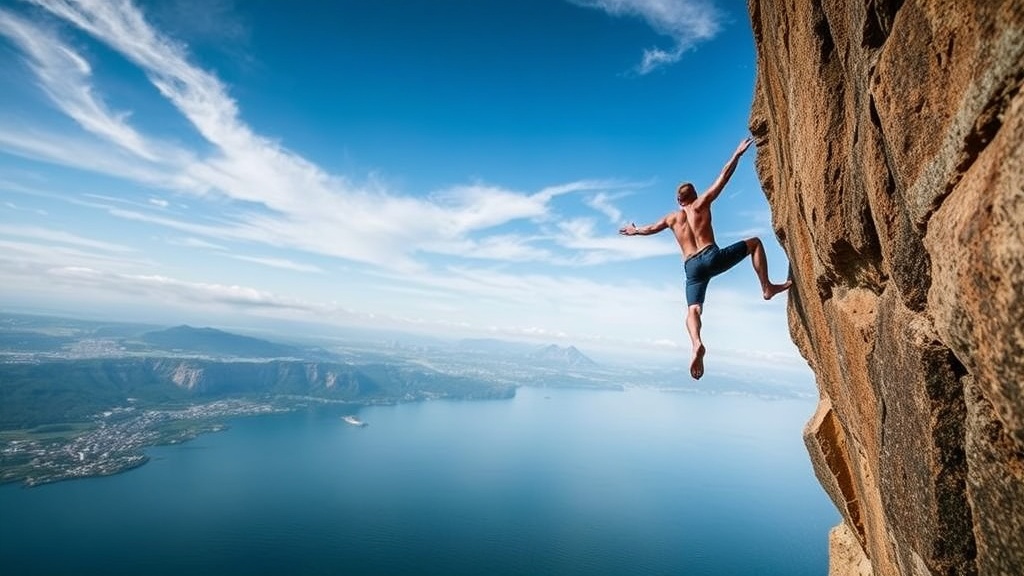
The Complete Cliff Diving Training Guide: From First Jump to Advanced Technique

Cliff diving demands more than courage. This guide covers everything needed to progress from that first hesitant leap off a 20-foot rock to executing complex aerial maneuvers from 85-foot platforms. Whether you're a pool diver looking to transition outdoors, a thrill-seeker wanting to do this safely, or an experienced jumper refining technique, you'll find actionable training methods, equipment recommendations, and safety protocols that actually work.
What Muscles Does Cliff Diving Work Most?
Cliff diving primarily targets the core, shoulders, and legs — with explosive power and stabilization mattering more than bulk strength. The sport functions as full-body resistance training where water impact creates forces up to 7 Gs.
The core muscles (rectus abdominis, obliques, and lower back) fire continuously throughout a jump. They maintain body position during freefall, initiate rotations, and brace for entry. Without adequate core conditioning, divers experience the "smack" — a painful belly flop that can cause bruising or worse.
Shoulders and upper back handle the arm positioning critical for controlled entries. The latissimus dorsi, deltoids, and rotator cuff muscles work together to create the "tight" entry that minimizes splash. Many divers underestimate this requirement until they experience shoulder fatigue after just a few jumps.
Legs generate the explosive push-off from rocks and platforms. The quadriceps, glutes, and calves also absorb impact forces upon water entry — though proper technique transfers most energy through the body's vertical axis. That said, weak leg stabilizers lead to wobbles during takeoff, which compound into rotation errors mid-air.
Training should emphasize functional movement over isolated bodybuilding. Exercises like plyometric box jumps, medicine ball rotational throws, and front levers translate directly to diving performance. The catch? You can't skip leg day — wobbly takeoffs ruin dives before they begin.
How Long Does It Take to Learn Cliff Diving?
Most athletes develop basic competency within 3 to 6 months of dedicated training, though progression varies dramatically based on prior acrobatic experience and comfort with heights. Competitive-level technique requires 2 to 4 years of consistent practice.
Beginners should master three fundamentals before attempting anything beyond 30 feet: proper entry form (straight body, pointed toes, arms locked), controlled takeoff (balanced push without over-rotation), and underwater orientation (knowing which way is up immediately after impact). These basics prevent injury and build the foundation for everything else.
The learning curve differs significantly between platform diving (fixed height, stable surface) and true cliff diving (variable conditions, natural surfaces). Platform training at facilities like USA Diving affiliated centers provides controlled environments for developing aerial awareness. Worth noting: many professional cliff divers — including Red Bull series competitors — spent years in competitive pool diving before transitioning outdoors.
Here's a realistic progression timeline:
| Timeframe | Skill Level | Typical Heights | Key Focus |
|---|---|---|---|
| 0-3 months | Beginner | 15-30 feet | Entries, comfort with impact |
| 3-6 months | Intermediate | 30-50 feet | Basic flips, takeoff consistency |
| 6-12 months | Advanced | 50-70 feet | Multiple rotations, spotting |
| 1-2 years | Expert | 70-85+ feet | Complex sequences, competition prep |
Mental barriers often slow progress more than physical limitations. Fear of heights affects most beginners — it's a survival mechanism, not a character flaw. Gradual exposure therapy (starting low, incrementally increasing) rewires this response. Visualization techniques — mentally rehearsing jumps with eyes closed, feeling the takeoff, seeing the landing — accelerate confidence building without physical risk.
What Equipment Do You Actually Need for Cliff Diving?
The key gear list is surprisingly short: quality wetsuit or impact vest, reliable water shoes with grip, and certified dive watch for timing entries. Everything else falls into "nice to have" territory — though some items significantly improve safety and performance.
Wetsuits serve dual purposes: thermal protection (water below 70°F causes rapid heat loss) and impact cushioning. The Patagonia R1 Lite Yulex offers excellent flexibility for dives requiring full range of motion, while thicker 3/2mm suits from Xcel provide more padding for high-impact entries. Many competition divers prefer spring suits (short arms and legs) for the shoulder mobility they allow.
Impact vests — specifically designed for high-diving rather than wakeboarding — absorb rib and chest impacts from slightly off entries. The NeilPryde Elite Impact Vest remains popular among Red Bull Cliff Diving athletes for its balance of protection and mobility. Regular life jackets won't work — they're too buoyant and restrict arm movement.
Footwear matters more than most beginners realize. Rocks are slippery. Wet rocks covered in algae are treacherous. The Five Ten Canyoneer 3 (now discontinued but available used) set the standard with its Stealth rubber outsole. Current alternatives include the Salomon Techamphibian 5 and Astral TR1 Mesh — both drain water effectively and grip wet stone.
Optional but recommended equipment:
- Dive watches: The Suunto D4i Novo tracks surface intervals between jumps — critical for avoiding shallow water blackout from repeated impacts
- Helmets: Gath Gedi convertible helmets protect against rock contact during climb-outs or unexpected wind gusts near cliff faces
- Nose clips: Simple swimmers' nose clips prevent water forced up nasal passages during high-speed entries
- Spotting equipment: Polarized sunglasses (Costa Del Mar or Oakley Prizm) help judges and coaches see divers against water glare
Here's the thing about gear — it won't fix bad technique. A $400 wetsuit doesn't prevent smacks. Proper training does. Invest in coaching before expensive equipment.
Training Progressions That Actually Work
Dryland training builds the physical foundation. Trampoline work develops air awareness and rotation timing without impact consequences. Start with straight jumps, progress to tucked positions, then add single backflips and frontflips. The Skybound Stratos or gym-grade Acon trampolines provide adequate bounce for diving-specific training.
Pool progression follows trampoline competency. Begin with platform diving at commercial facilities — many offer 5-meter and 10-meter platforms for public use. The Mission Viejo Nadadores facility in California and Indiana University's Counsilman Billingsley Aquatic Center represent gold-standard training environments with certified coaches.
Spinal alignment drills deserve dedicated practice. Stand against a wall — heels, buttocks, shoulders, and head touching simultaneously. This is the "tight" position that minimizes splash and prevents back injuries. Practice falling backward from 3-foot heights into pools, maintaining that straight line. The water will tell you immediately when posture breaks.
Entry technique separates safe divers from injured ones. The "rip" entry — named for the ripping sound of minimal splash — requires simultaneous muscle activation throughout the body. Arms lock overhead in a simplified position. Core braces like preparing for a punch. Legs squeeze together with pointed toes. At impact, the body becomes a rigid cylinder cutting through water rather than slapping against it.
Common Mistakes That Cause Injuries
Over-rotation ruins more jumps than under-rotation. Beginners see flips on YouTube and rotate too aggressively, completing 1.5 flips instead of one and entering sideways. The fix? Slower rotation initiation — most beginners rush their takeoff instead of driving upward first. Vertical height buys time for rotation; spinning immediately off the platform reduces both height and control.
Looking down during entries causes back arching — the "banana back" position that creates massive splash and spinal compression. Fix this by focusing vision on the horizon until the final moments of descent. Some divers pick a fixed point on the cliff face to maintain orientation.
Shallow water represents the deadliest hazard. Cliff divers need minimum 15 feet of clear water depth for every 30 feet of jump height — and that's assuming perfect vertical entry. Angled entries or slightly off positions require more depth. Always scout landing zones with mask and snorkel before jumping. Submerged rocks, changing tides, or hidden debris transform safe jumps into hospital visits.
Repeated impacts without adequate recovery cause cumulative trauma. Shallow water blackout — loss of consciousness from oxygen deprivation after multiple deep entries — kills experienced divers who push too hard on training days. The rule: one minute of surface recovery for every 10 feet of height jumped. An 80-foot jump demands 8 minutes before the next attempt.
Advanced Techniques for Experienced Jumpers
The pike position (bent at hips, legs straight) enables faster rotation rates than tuck while maintaining cleaner aesthetics. Competitive divers use pike for multiple rotation sequences where tuck would appear sloppy. Developing pike rotation requires exceptional hamstring flexibility — months of stretching to achieve the compressed position.
Twists add lateral rotation to vertical flips. A "full-twisting double" involves two backflips with one complete 360-degree horizontal rotation. Spotting (picking visual reference points during rotation) becomes key for orientation. Most divers spot the water twice during complex sequences.
Cliff-specific variables separate outdoor diving from platform work. Wind gusts, uneven takeoff surfaces, and changing light conditions demand adaptive technique. Professional competitions at locations like Red Bull Cliff Diving World Series venues require pre-jump scouting and sometimes last-minute technique adjustments based on conditions.
The mental game intensifies at height. From 85 feet, divers reach 53 mph before water entry. That's highway speed, vertical, into a surface that feels like concrete with poor technique. Elite divers develop pre-jump routines — specific breathing patterns, visualization sequences, and movement triggers that activate muscle memory and quiet the amygdala's fear response.
World-class cliff divers train at Olympic-style facilities during off-seasons, then transition to natural locations as competitions approach. This hybrid approach maintains technical precision while developing the adaptability natural environments demand. No two cliffs jump exactly the same — and that's precisely why the sport captivates those who pursue it.