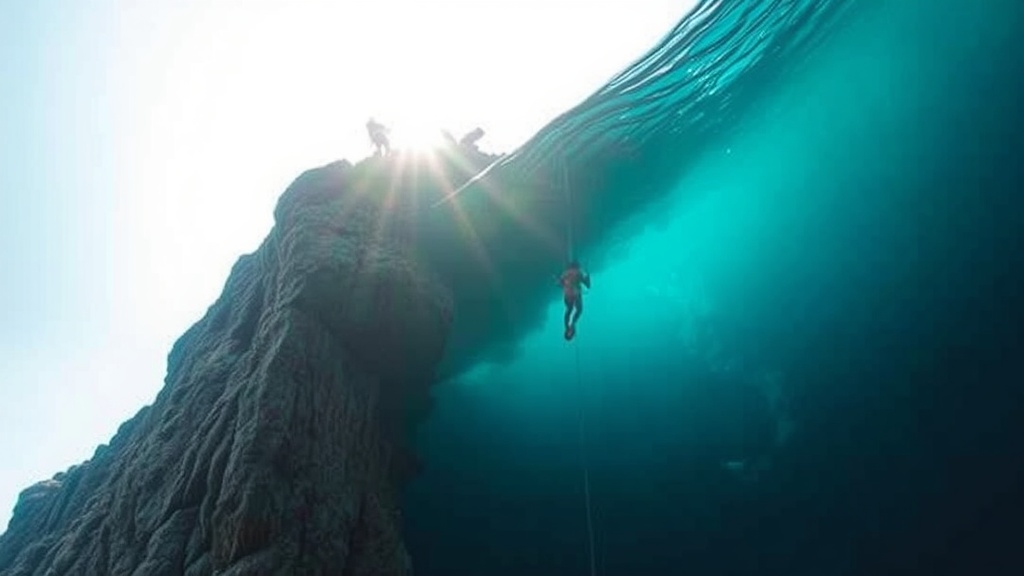
The Complete Beginner's Guide to Safe Cliff Diving Techniques

Cliff diving combines raw athleticism with breathtaking natural environments, but without proper technique and safety awareness, what starts as an adventure can end in serious injury. This guide breaks down everything a beginner needs to know—from selecting appropriate jump heights to mastering entry form and understanding water conditions. Whether standing on the edge of a 20-foot quarry in Texas or a 40-foot coastal cliff in Oregon, the principles here will help build confidence while keeping risk to a minimum.
How High Should Your First Cliff Dive Be?
Start at 15 to 20 feet. That's the sweet spot for learning proper form without the margin-for-error shrinking to nothing.
Many beginners watch Red Bull Cliff Diving competitions—where athletes hurl themselves from 85 feet—and assume lower heights are somehow "safe" by comparison. Here's the thing: water surface tension doesn't care about bravado. A belly flop from 20 feet delivers roughly the same impact force as hitting concrete from a standing position. From 40 feet, even a slightly imperfect entry can result in sprains, bruising, or worse.
The progression looks like this:
- 15-20 feet: Learn the fundamentals. Practice straight vertical entries, get comfortable with the freefall sensation, and dial in your timing.
- 25-35 feet: Once 20-foot jumps feel routine and form is consistent, this range introduces more airtime without dramatically increasing risk.
- 40+ feet: Reserved for experienced divers with spotters, rescue equipment on standby, and comprehensive water depth verification. The Red Bull Cliff Diving World Series starts here.
That said, height isn't the only variable. Rock overhangs, underwater obstacles, and exit routes matter just as much. A clean 30-foot jump into deep water beats a sloppy 20-footer into questionable depths every time.
What Body Position Prevents Injury When Cliff Diving?
Vertical entry—feet first, body straight as a board, arms pinned tight to the sides or holding the nose.
The physics are unforgiving. Water displaces around a narrow object far easier than a broad surface. Think about how easily a knife slices versus the flat of a spatula. Same principle. When hitting water at 30+ mph (the speed reached after just 20 feet of freefall), surface area determines impact force.
Here's the breakdown of proper entry form:
- The stance: Feet shoulder-width apart, knees slightly bent (not locked, not crouched), weight balanced.
- The arms: Either straight down at the sides, crossed over the chest, or one hand pinching the nose with the other arm wrapped around the body.
- The head: Tucked slightly forward—chin toward chest—to prevent whiplash and keep the spine aligned.
- The core: Engaged. A loose body folds on impact.
The catch? Many beginners flinch at the last millisecond—instinct takes over and the body curls or twists. That's why practice at lower heights matters. Muscle memory overrides panic response.
Rotational dives, flips, and variations come only after hundreds of perfect vertical entries. Even then, pros like USA Diving certified coaches recommend learning aerial maneuvers in controlled pool environments first.
How Deep Does Water Need to Be for Safe Cliff Diving?
Minimum 10-12 feet of depth for every 10 feet of jump height—and even that assumes perfect vertical entry into calm, clear water.
Depth verification isn't negotiable. Before any jump, someone needs to physically check the landing zone. Not guess. Not assume. Actually measure.
Conditions that affect required depth:
| Factor | Impact on Safety |
|---|---|
| Tidal changes | Coastal cliffs can lose 5-15 feet of depth during low tide. Check local NOAA tide charts before jumping. |
| Water clarity | Murky water hides rocks, fallen trees, and depth variations. If you can't see bottom, don't jump. |
| Recent weather | Heavy rain shifts river rocks and alters quarry depths. Yesterday's safe spot might be shallow today. |
| Entry angle | A diver who enters at an angle travels farther underwater. Add 2-3 feet of buffer for non-vertical entries. |
Worth noting: professional cliff divers often work with 15+ feet of depth per 10 feet of height. The margin for error shrinks dramatically as speeds increase.
Spotting Techniques and Communication
Never dive alone. The buddy system isn't just about having someone to high-five after a clean entry—it's about survival if something goes wrong.
A good spotter stands where they can see both the diver and the landing zone. They watch for:
- Surface debris that drifted in
- Other swimmers or boats entering the area
- The diver's form during approach (stumbling, hesitation, or visible intoxication)
- Entry quality and immediate post-entry response
Establish clear hand signals before climbing. A fist means "hold." A thumbs-up means "clear to jump." Waving arms means "abort immediately." These aren't suggestions—they're emergency protocols that have saved lives.
What Gear Do Beginners Actually Need?
Less than you might think. Unlike scuba or skydiving, cliff diving requires minimal equipment—but what you do need matters.
Wetsuit or rash guard: Water temperature drops rapidly with depth. A 3mm wetsuit (brands like Patagonia R1 or O'Neill Reactor) prevents cold shock and provides minor protection from entry impact.
Water shoes: Not for the jump itself—barefoot entry is cleaner—but for climbing back up rocky surfaces. The Five Ten Canyoneer or similar approach shoes with sticky rubber prevent slips on algae-covered rocks.
Rescue equipment: At minimum, a throw rope and flotation device kept in the water or at the exit point. Experienced groups often bring a paddleboard or kayak to serve as mobile rescue platforms.
Depth checking tools: A weighted line marked in foot increments, or a simple dive flag with float to mark the landing zone and warn boat traffic.
The reality? Most cliff diving accidents happen during the climb out, not the jump itself. Proper footwear and a planned exit route matter more than any gadget.
Physical Preparation and Progression
Cliff diving demands explosive power, spatial awareness, and mental composure. The best training happens in a pool first.
Start with platform diving at a local facility. The University of Texas at Austin and many municipal pools offer 5-meter and 10-meter platforms where beginners can practice entries without the environmental variables of natural cliffs. Mastering the fear response at 16 feet (5 meters) builds the foundation for higher jumps.
Core strength determines how well a diver maintains form in freefall. Planks, hollow body holds, and leg raises translate directly to rigid entries. Plyometric exercises—box jumps, depth drops—prepare the legs for impact absorption and explosive takeoffs.
Here's the thing about fear: it's not the enemy. Fear keeps you careful. The problem is panic—when adrenaline overrides training. Controlled exposure at gradually increasing heights teaches the nervous system that freefall is survivable. The body adapts. The mind settles.
Experienced divers develop a pre-jump routine. Deep breaths. Visualization of the entry. A specific stance. These rituals aren't superstition—they're cognitive anchors that trigger calm focus when standing at the edge.
Legal and Ethical Considerations
Many popular cliff diving spots exist in legal gray areas. Quarry diving might violate trespassing laws. Coastal jumps may fall within marine protected areas. Waterfall dives on public land often carry liability restrictions.
Research before you go. The National Park Service prohibits diving at many locations—including most spots at Lake Powell and several Oregon coast cliffs—due to injury history and rescue resource strain. Fines start around $150 but can reach $5,000 for violations in protected areas.
Beyond legality, consider impact. Noise, litter, and reckless behavior get spots shut down for everyone. Pack out trash. Keep groups small. Respect local residents who'd rather not watch another helicopter evacuation.
Cliff diving offers something rare—the pure rush of gravity, water, and personal skill intersecting in a single moment. Done right, it's addictive. Done wrong, it's permanent. The difference comes down to preparation, patience, and the willingness to walk away when conditions aren't perfect. There's always another day, another cliff, another jump—but only if you respect the fundamentals that keep you intact.