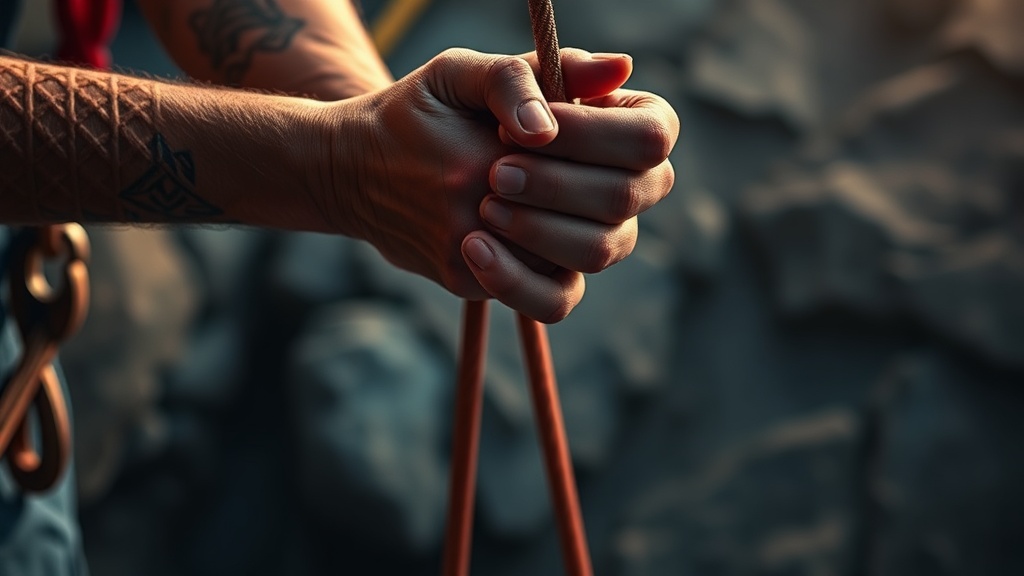
Developing Grip Strength for Climbing and Rigging Safety

Building Hand Endurance for High-Stakes Environments
This post covers how to build functional grip strength and forearm endurance specifically for extreme sports involving heavy rigging, climbing, or manual rope work. We'll look at the difference between static holds and dynamic pulling, how to prevent tendon issues, and the training methods that actually work for high-impact activities. Whether you're securing a line on a cliff face or managing heavy gear in a high-velocity environment, your hands are your primary interface with safety.
Grip strength isn't just about how much weight you can lift; it's about how long you can hold a position without your muscles failing. In extreme sports, failure isn't an option. If your forearms pump out while you're mid-climb or mid-rig, your stability disappears. This leads to sloppy movement and, eventually, dangerous mistakes. We're focusing on the physiological demands of sustained tension and the training required to withstand it.
Why do my forearms burn during high-intensity activity?
That burning sensation is lactic acid buildup caused by a lack of blood flow—often called the "pump" in climbing circles. When you perform high-tension movements, your muscles contract so tightly that they compress the capillaries, temporarily restricting oxygenated blood to the tissue. If your training only focuses on short bursts, you'll find yourself hitting a wall quickly. You need to train for both strength (the ability to hold heavy weight) and endurance (the ability to hold a lighter weight for a long time).
To build a well-rounded grip, you have to target the three main types of grip strength:
- Crushing Grip: Used when squeezing an object (like a handhold or a thick rope).
- Support Grip: The ability to hold onto something for a long duration (like a heavy bag or a hanging limb).
- Pinch Grip: Using the fingers and thumb to hold weight (vital for certain types of technical rigging).
How much grip training is enough for extreme sports?
The mistake many athletes make is overtraining. The tendons in your hands and wrists are much slower to adapt than your muscle fibers. If you go too hard, too fast, you'll end up with tendonitis or even a tear. I suggest a split approach. Dedicate two days a week to heavy, low-rep-count strength work (like dead hangs or heavy carries) and one day to high-rep endurance work. This builds a foundation that doesn't rely solely on brute force.
For those looking at the physiological side of muscle fatigue, the National Institutes of Health provides extensive data on how muscle fatigue affects motor control. When your grip fails, your entire kinetic chain suffers. You lose the ability to stabilize your core because your extremities are no-longer locked in. This is why we treat grip as a foundational movement rather than an afterthought.
Can you improve grip strength with minimal equipment?
Yes. You don't need a commercial gym. Simple tools like a thick rope, a heavy stone, or even just your own body weight on a pull-up bar can do the job. If you're out in the field, find a sturdy branch or a rock ledge. The goal is to create tension. For example, try "finger curls" using a heavy-duty resistance band or even a weighted backpack. The key is consistency. If you can only train in a gym, you're missing the chance to build "functional" grip that translates to real-world, uneven surfaces.
A common technique used by professional climbers and riggers is the "hang test." Find a ledge or a bar and see how long you can hang with a neutral spine. If you're aiming for elite levels, you should be able to hang for at least two minutes without significant shaking. If you're struggling to hit sixty seconds, your endurance is a liability in high-stakes environments.
Common Mistakes in Grip Development
One of the biggest errors is ignoring the extensors. Most people only train the muscles that close the hand (the flexors). If you only train the squeeze, you'll develop a massive strength imbalance that leads to elbow pain or "climber's elbow." To prevent this, you must train the opening of the hand. Use rubber bands or specialized training tools to practice opening your fingers against resistance. This keeps the joint balanced and healthy.
Another mistake is neglecting the wrist. A strong grip is useless if your wrist is floppy. You can incorporate wrist curls and reverse curls into your routine to ensure that when you grab a line or a hold, the power is transferred through a stable, rigid lever. A stable wrist allows for much more effective force transfer during high-impact or high-tension moments.
If you're serious about your performance, look at the strength standards for your weight class. Knowing where you stand can help you set realistic goals. Don't just grab things—learn how to manipulate your grip to suit the terrain or the gear you're using. This is what separates a hobbyist from a professional-grade athlete.