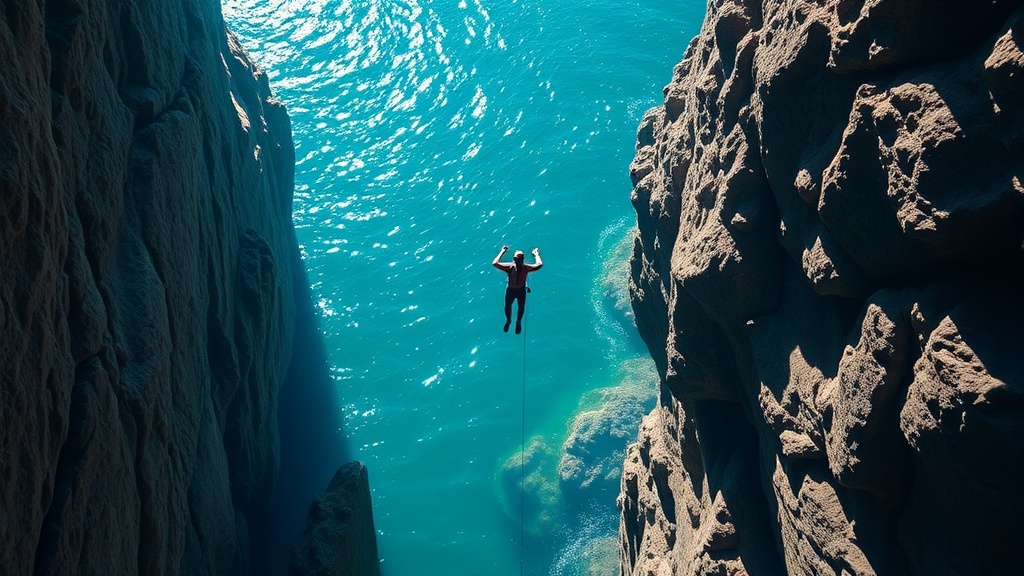
5 key Training Tips Every Aspiring Cliff Diver Must Master

Master the Perfect Pencil Entry Technique
Build Core Strength and Body Control
Progressive Height Training Protocol
Develop Mental Resilience and Fear Management
Learn Environmental Assessment and Safety Checks
What This Post Covers (and Why It Matters)
Cliff diving isn't just about courage—it's a discipline that demands precise physical preparation, technical skill, and respect for the forces at play. This guide breaks down five foundational training areas every beginner needs to address before launching from any significant height. Whether you're eyeing the 20-foot ledge at your local quarry or dreaming of spots like Possum Kingdom Lake in Texas, these principles will keep you safe and help you progress faster than trial and error ever could.
How Do You Build the Physical Foundation for Cliff Diving?
Cliff diving demands explosive power, core stability, and joint resilience that most conventional training doesn't develop. You'll need to train differently than a pool diver or gym enthusiast.
The impact forces are real. Jumping from 60 feet means hitting the water at roughly 40 mph. Your body must absorb that shock through proper alignment and conditioned tissues. Here's the thing—most injuries happen not from the height itself, but from poor entry mechanics and underprepared connective tissue.
Priority one: ankle and knee resilience. The eccentric load on landing is brutal. Box jumps, depth drops, and single-leg landings should form your base. Start with 18-inch boxes, progress to 24 inches, then 30 inches over 8-12 weeks. Land softly—balls of feet first, knees tracking over toes, core engaged. Three sets of eight reps, twice weekly, beats daily punishment.
Core stability under load matters enormously. A loose midsection on entry means a painful belly flop—or worse, spinal compression. Focus on anti-extension and anti-rotation work: ab wheel rollouts, Pallof presses, and hollow body holds. The Rogue Ab Wheel costs under $30 and delivers more applicable strength than crunches ever will.
Shoulder durability for entries and exits. Whether you're entering with a tuck, pike, or straight position, your shoulders take stress. Band pull-aparts, face pulls, and Y-T-W raises build the rotator cuff endurance you'll need. Don't skip these—shoulder injuries end diving careers faster than almost anything else.
| Training Component | Frequency | Key Exercises |
|---|---|---|
| Lower Body Power | 2x per week | Box jumps, depth drops, single-leg hops |
| Core Stability | 3x per week | Ab wheel, Pallof press, hollow holds |
| Shoulder Prehab | 3x per week | Band pull-aparts, face pulls, Y-T-W |
| Mobility | Daily | Ankle circles, hip flexor stretches, thoracic rotations |
What Entry Techniques Should Beginners Master First?
Start with the straight dive, the tuck, and the pike—master these three before anything fancy. These foundational entries determine whether you slice into the water cleanly or suffer the consequences of a poor landing.
The straight dive (or swan dive variation) teaches body alignment. You want to enter fingertips first, body tight, core braced, feet together. The catch? Most beginners over-arch their backs or drop their heads. Both mistakes hurt. Practice on a 10-foot platform until the entry feels automatic.
The tuck position—pulling knees to chest—slows rotation and looks impressive when timed right. You'll need sufficient hip flexibility to grab your shins properly. Worth noting: a loose tuck opens you up to painful impacts. Pull tight, grab solid, release at the right moment. Many beginners hold too long or release too early. Both errors send you off-angle.
The pike—bending at the hips with straight legs—demands hamstring flexibility most people don't have. Can't reach your toes on dry land? Don't pike from height yet. Work the pike stretch daily: seated, legs straight, reach for those toes. Hold for two minutes. The ProsourceFit exercise mat gives you enough cushion for serious stretching sessions without slipping.
Pool practice isn't optional. Find a facility with 5-meter and 10-meter platforms. USA Diving maintains lists of certified training centers across the country. The water entry from a 10-meter platform in a controlled environment prepares you mentally and physically for natural cliff environments. That said, pool water behaves differently than open water—there's no wind, no currents, no uneven surfaces below.
How Do You Scout and Assess Cliff Diving Locations?
Location assessment separates reckless jumps from calculated, repeatable dives. You must verify water depth, check for submerged hazards, understand surface conditions, and plan your exit before you ever climb up.
Depth requirements are non-negotiable. The general rule: minimum water depth should be your jump height plus 10-15 feet. Jumping 40 feet? You need 50-55 feet of water minimum. Less depth raises your injury risk exponentially. Use a weighted line or a quality depth finder to verify. The Garmin Striker 4 provides accurate depth readings for under $200—cheap insurance against a broken ankle (or worse).
Submerged hazards kill. Trees, rocks, old construction debris, changing sandbars—these hide beneath the surface. Scout at low tide if you're on the coast. In lakes and quarries, visibility often varies by season. Early spring usually offers the clearest water after winter turnover. Dive down and check your landing zone personally. Don't trust "someone jumped here last year" as verification.
Surface conditions matter. Wind creates chop, and chop ruins entries. Whitecaps on the surface mean painful, unpredictable landings. Currents can drift you off target or trap you against cliffs after entry. Observe for at least 15 minutes before jumping. Watch how the water moves. Watch other swimmers if they're present.
Exit strategy comes first. You might stick the entry perfectly, but can you get out? Jagged rocks, steep walls, and cold water create extraction nightmares. The catch? Many beautiful dive spots have terrible exits. Possum Kingdom Lake's Hell's Gate offers stunning 50-80 foot jumps—but you'll need to swim to designated climb-out points or have boat support waiting.
What Mental Preparation Does Cliff Diving Require?
Confidence without fear is just recklessness—what you need is fear management and present-moment focus. The mental game often separates those who progress from those who try once and quit.
Visualization works. Top divers run through their dive mentally before every jump. See the takeoff, feel the body position, picture the clean entry. But here's the thing—visualization without physical preparation creates false confidence. You can't think your way past poor technique.
Breath control manages anxiety. Box breathing (four seconds in, four hold, four out, four hold) calms the nervous system without sedating it. You want alert, not jittery. Practice this on the ground, then on low platforms, then at height. The pattern becomes automatic.
Commitment is binary. Half-committed jumps cause injuries. You either go with full intention or you walk back down. There's no shame in the latter—cliffs have been there for millennia and will wait. The shame is in launching hesitantly, body tense and mind scattered. That said, learning to read your own readiness is a skill that takes time. Some days you're on. Some days you're not. Pros know the difference.
Start with progressive exposure. Ten feet. Then twenty. Then thirty. Don't let ego dictate your progression. The Red Bull Cliff Diving World Series athletes train for years before tackling the 85-foot competition heights. They've earned that progression through thousands of lower jumps.
What Equipment and Safety Gear Do You Actually Need?
Unlike some extreme sports, cliff diving requires minimal gear—but what you do need, you really need. Skimping on basics turns manageable situations into emergencies.
Wetsuit or springsuit. Water temperature drops fast with depth, and hypothermia impairs judgment. A 3/2mm full wetsuit (like the O'Neill Epic series) handles most temperate conditions. For tropical locations, a springsuit or even board shorts suffice—but bring backup warmth in case conditions change or you need multiple attempts.
Foot protection. Climbing to launch points often means sharp rocks, barnacles, or hot surfaces. Old running shoes work, but dedicated water shoes protect better. The Merrell Hydro Moc provides grip, protection, and drains instantly. Don't launch barefoot unless you've personally inspected every step of the approach.
Spotters and safety swimmers. Never dive alone. Your spotter watches your entry and signals if conditions change. Safety swimmers wait below with flotation devices in case you're winded or injured on impact. This isn't negotiable—it's basic risk management. The best divers in the world use spotters. So should you.
First aid and exit plan. Someone on your team needs wilderness first aid training. Someone needs to know the fastest route to medical facilities. Cell service rarely works at remote cliff locations. Plan for self-rescue, not phone-dependent rescue.
Training for cliff diving builds more than physical capacity—it develops judgment, patience, and respect for environments that don't forgive mistakes. Start small, build systematically, and never let the pursuit of a social media clip override the fundamentals that keep you healthy and diving for years to come.